
Miami Sailing School has published educational information addressing factors that new sailors should consider when selecting a sailing course in Miami. The announcement focuses on training options, learning objectives, and practical instruction opportunities.
Miami, Florida, United States, 9th Jun 2026 — Miami Sailing School has released educational information intended to help prospective sailors better understand the factors involved in selecting a sailing course. The announcement comes as recreational sailing continues to attract interest from individuals seeking opportunities to develop boating knowledge, navigation awareness, and practical sailing skills in South Florida’s coastal waters.
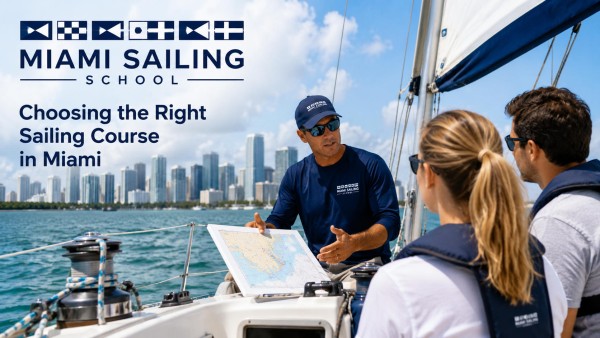
The educational guidance focuses on the process of evaluating available training options and identifying courses that align with a student’s current experience level and long-term objectives. As sailing gains attention among recreational boaters and outdoor enthusiasts, educational organizations have increasingly emphasized the importance of selecting training programs that provide both theoretical instruction and practical on-water experience. Understanding course structure, instructional methods, and expected learning outcomes can help prospective students make informed decisions before beginning formal sailing education.
Educational Resources Support Informed Training Decisions
Individuals entering sailing education often have a wide range of backgrounds and goals. Some students are entirely new to boating, while others may have previous experience on powerboats or exposure to sailing through family activities, travel, or recreational outings. Educational resources that explain the differences between introductory and advanced instruction can help students identify training pathways that match their needs and expectations.
Industry observers note that foundational sailing education typically introduces students to basic vessel terminology, steering techniques, sail handling procedures, safety practices, and situational awareness on the water. These concepts provide the framework for continued learning and skill development. Selecting a course that corresponds with a student’s current knowledge level can contribute to a more effective learning experience and allow for gradual progression into more advanced topics.
Practical On-Water Experience Remains a Key Consideration
One of the primary factors addressed in the educational guidance is the role of hands-on training within sailing instruction. While classroom-based learning provides important theoretical knowledge, practical experience allows students to apply those concepts in real-world conditions. Exposure to changing wind patterns, vessel movement, navigation markers, and sail adjustments helps new sailors develop familiarity with the conditions they are likely to encounter during recreational sailing activities.
On-water instruction also introduces students to decision-making processes that are difficult to replicate in a classroom environment. Learning how to respond to environmental changes, communicate effectively aboard a vessel, and operate within established safety procedures can contribute to a broader understanding of seamanship. Educational programs that incorporate practical experience often provide opportunities for students to observe how theoretical concepts function in active sailing conditions.
Learning Goals Influence Course Selection
The announcement further highlights the importance of identifying personal objectives before enrolling in a sailing course. Students may pursue sailing education for a variety of reasons, including recreational enjoyment, personal development, future boat ownership, or interest in advanced certifications. Understanding these goals can help determine which type of training program is most appropriate and what level of instruction may be required.
Educational specialists frequently recommend that beginners establish realistic expectations regarding the pace of learning and skill development. Introductory courses are generally designed to build confidence and familiarity with sailing fundamentals before students progress into more complex aspects of navigation, weather interpretation, and vessel management. Matching educational objectives with available training opportunities can help create a structured path toward continued learning.
Miami’s Coastal Environment Provides Unique Educational Opportunities
Miami’s location along Biscayne Bay and the Atlantic coastline offers a setting that supports year-round sailing instruction. Protected waters, navigational aids, varying wind conditions, and active boating environments create opportunities for students to experience a range of sailing scenarios during training. These conditions can contribute to the development of practical skills while providing exposure to real-world boating environments under instructional supervision.
Educational organizations operating in the region often incorporate local environmental conditions into training programs to help students gain familiarity with the factors that influence vessel handling and navigation. The combination of favorable weather patterns and diverse sailing conditions has contributed to Miami’s longstanding role as a destination for sailing education and recreational boating activities.
Growing Interest in Sailing Education Encourages Access to Reliable Information
As more individuals explore opportunities to learn sailing, access to educational information remains an important part of the decision-making process. Understanding how courses are structured, what skills are introduced during training, and how practical instruction contributes to overall development can help prospective students evaluate available options more effectively.
Miami Sailing School stated that the educational guidance was developed to assist individuals in understanding the considerations involved in selecting a sailing course and to support informed decisions regarding sailing education and skill development opportunities in Miami.
Media Contact
Organization: Miami Sailing School
Contact Person: Russ Beyer
Website: https://miamisailing.com/
Email: Send Email
City: miami
State: florida
Country:United States
Release id:45839
The post Miami Sailing School Highlights Factors New Sailors Should Consider When Choosing a Sailing Course appeared first on King Newswire. This content is provided by a third-party source.. King Newswire makes no warranties or representations in connection with it. King Newswire is a press release distribution agency and does not endorse or verify the claims made in this release. If you have any complaints or copyright concerns related to this article, please contact the company listed in the ‘Media Contact’ section
Disclaimer: The views, suggestions, and opinions expressed here are the sole responsibility of the experts. No journalist was involved in the writing and production of this article.
